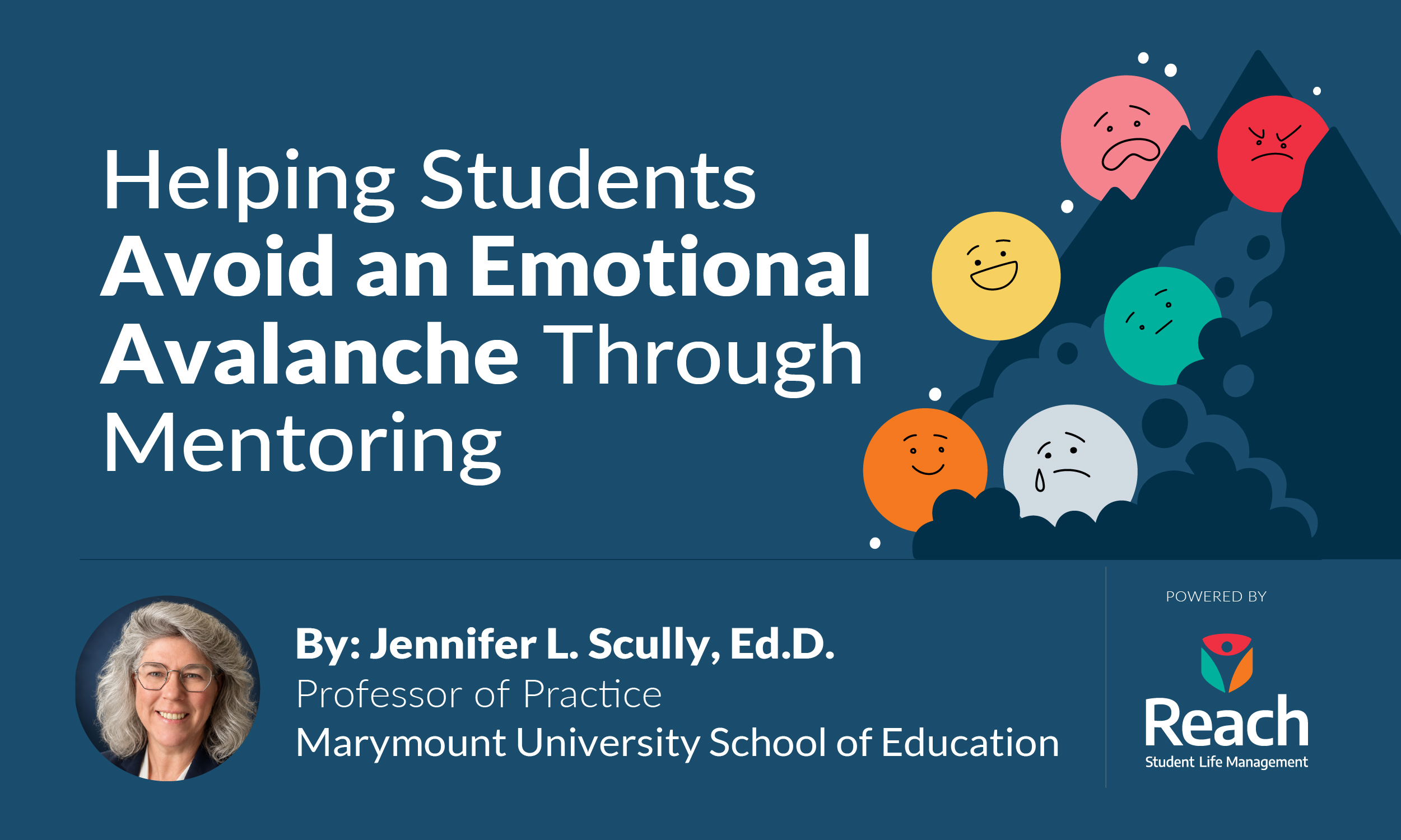

Abstract | Emotional Avalanche
Research shows that students who develop secure attachments, healthy emotional regulation and good interpersonal skills tend to develop a stronger inclination to be resilient. Oftentimes, faculty put their own mental health aside for the sake of their students. This paper shows how to diagnose gaps in resiliency in school settings and formulate a mentoring plan to address those concerns within the walls of the institution for faculty and students alike. Mentoring affords faculty the tools to offer tangible actions that provide socio-emotional support that help their students’ resiliency. This mentorship program has been researched, developed and tested to show that mentoring techniques are beneficial to all in educational settings. This mentoring program shows faculty how to conduct their own self-assessment to understand their level of resilience and how their social-emotional intelligence (SEI) can positively affect their students.
While schools are often focused on teaching and the educational outcomes of their students, recently, there has been more attention brought to the well-being of students. When students are engaged in their school lives, the level of social-emotional support from the faculty can be just as critical as choosing their friends, clubs, and activities. Changing the narrative on the role of faculty involves training them to be mentors who can help their students maintain emotional resilience throughout the educational journey. The demands associated with mentorship can often be great, and staff burnout and retention is often a challenge for schools. According to Lundine (2022), the attrition, engagement, and retention of faculty can have a significant impact on student progress and persistence; therefore, promoting emotional resilience of both students and faculty becomes vitally important for program success. SEI/SEL is one framework to support successful mentoring that assists students with coping skills and reduces staff burnout.
Shifting advisory roles to mentorship programs in schools places emphasis on faculty demonstrating an understanding of the needs of the learner first in order to provide supportive and safe learning environments that are developmental, directed, growth-oriented, team-oriented, and scaffolded throughout the entirety of the student’s time in the program. This is at the heart of socio-emotional intelligence (SEI) and allows mentors to foster social-emotional learning (SEL) with their students. According to the Collaborative for Academic, Social, and Emotional Learning (CASEL), SEL is a process that helps students “acquire and apply the knowledge, skills, and attitudes to develop healthy identities, manage emotions and achieve personal and collective goals, in addition to showing empathy for others, maintaining supportive relationships and making responsible decisions” (2022). Socio-emotional intelligence is the ability to consider emotions, intuition, and cognition to identify, manage and express emotions and to respond to social situations with authenticity, openness and fairness (Devis-Rozental, 2023). This is at the core of mentoring relationships for students and the faculty’s ability to impart SEL principles within the relationship; thus, changing the role from advisor to mentor. Students’ mentors need to have strong SEI in order to be a helpful resource and serve as role models for their mentees, as well as assisting them through the extended relationship of the school journey. Socio-emotional intelligence merges the concepts of social intelligence and emotional intelligence in addressing our cultural and social experiences with one another. These concepts are interrelated and inseparable. Self-awareness is the basis for developing socio-emotional intelligence and research suggests that as people learn about themselves, they are able to focus on areas that affect interactions with others such as motivation, empathy, managing emotions and self-compassion (Devis-Rozental, 2023). This is at the core of mentoring relationships for students and the faculty’s ability to impart SEL principles within the relationship. It is the extension of the relationship that guides both mentor and student toward school success.
Providing institutional support for faculty and fostering a mentoring program strengthens the school’s culture. Training in ego-supportive counseling techniques, which uses Rogerian reflection, and learning how to implement supports to their students offer avenues for mentors to focus on building their own SEI to properly be present and support their students. Specific training has been developed to provide professional development to faculty that can be implemented in both online and in-person settings. By providing opportunities for faculty and student collaboration to build a trusting relationship, mentoring extends the learning community and fosters a more equitable way for all students to have the opportunity to have a healthy school experience. This relationship between mentor and student emphasizes the generation, transformation, and use of professional knowledge and practice. Additionally, mentors more so than advisors help students with higher order executive functioning skills that are critical to success in present and future school settings. For example, when students face difficulty planning for assignments and obligations, linking actions to achieve long-term goals, and become time blind, a mentor can guide the student through understanding the larger picture and guide them through the steps to improvement.
Socio-Emotional Intelligence and Executive Functioning
Social and Emotional Learning (SEL) is essential to helping us lead healthy, fulfilling lives. By building adult and student SEL, all educational communities are safer places physically and emotionally. SEL promotes equity through authentic partnerships to establish learning environments and experiences that feature trusting relationships and ongoing evaluation. SEL develops skills that help us be successful in all parts of our lives such as communicating effectively, setting goals, staying motivated, and making decisions that benefit ourselves and others. With these skills, we can build healthy relationships, succeed in all aspects of our lives, and contribute to our school communities. The natural partner to emotional wellness is executive functioning. When students have the tools, such as organizational skills, time management techniques, and chunking abilities, they are able to better navigate the complexities of academic work and manage a variety of school obligations. When support is at the forefront, there is less anxiety, less stress and more clarity of mind. Research indicates that positive SEL enhances student engagement, academic performance, and social and executive functioning skills while contributing to healthy well-being (CASEL, 2022).
Quality mentorship is paramount to student success and persistence in education. Strong personal relationships, frequent touchpoints, and a sense of trust encourage student persistence and retention (Rogers-Shaw & Carr-Chellman, 2018). Intellectual humility is positively associated with values such as empathy, gratitude, and benevolence. These values lend themselves to the idea that faculty can care about the wellbeing of their students and be comfortable in their vulnerability by showing that they do not have all the answers, but they are willing to offer support to their students. There must be trust established in order for the relationship to work. Faculty must be able to align their values and principles with what is best for the student and reflective of the school mission. When these elements are intentionally followed by both the mentor and the student, the challenges of school are less of a barrier to student success. Mentors who engage in motivational interviewing, a person-centered approach, which shows their students that they are thought partners and not merely advisors. Ethically, mentors understand and respect the power balance as well as their student’s need for autonomy. Mentoring is successful when commitments are kept, fidelity is valued, honest feedback exists, and there is a genuine goal of helpfulness.
Mentors who are properly trained in ego-supportive counseling techniques and who embrace the advising role beyond academic planning not only demonstrate their own socio-emotional intelligence, but they engage in a mentoring program that provides a setting and mentoring interactions that are at the same time informative and rewarding. The mentor should be an experience-driven guide whose role is to offer insights that help in the process of self-discovery, problem solving and growth. When mentors and students are effectively matched, the relationship is more likely to succeed. As with any relationship, mentorship requires dedication and commitment from both parties and strong emotional intelligence accompanied by foundational social and executive functioning skills. These skills should be in the mentor’s toolbox and ready to be developed in the student. Central to the success of a mentoring relationship is effective communication. Communication is more than just active listening. Asking probing questions through the Socratic method expands the student’s view and introduces more perspectives (Roberts et al., 2019). Through solid communication skills, the mentor can refocus the student’s attention on the tasks at hand and set a path for successful school experience. The structure of a mentoring relationship emphasizes the development of new knowledge and addresses challenges together through promoting open and honest communication. By committing to help their students within a mentoring structure, faculty develop their own strong SEI by engaging in reflective practices as they support their students. Realistic goal setting, resilience, problem solving, integrity, responsibility to the relationship are but a few aspects of building strong SEI (Brown et al., 2021).
Once a relationship is established with a strong socio-emotional foundation, then faculty can begin to work with their students on developing the executive functioning skills such as realistic goal setting, managing emotions and prioritization that are necessary for success. When executive functions fail, it affects one’s socio-emotional functioning. Individuals may have trouble analyzing, planning, organizing, scheduling, and completing tasks, which leads to struggles with managing frustration, initiating and finishing tasks, recalling and following multi-step directions, staying focused, self-monitoring, and balancing responsibilities (Rabin et al., 2018). When mentors practice skills such as expressing humility, sharing mistakes and lessons learned, separating ego and intellect, discussing anxiety, insecurities, recognizing strengths, and maintaining motivation, students can begin to view the mentor as someone championing their success. Mentoring is effective when there exists intentional modeling of socio-emotional skills while addressing key executive functioning skills that encompass a student’s life. There are eight core executive functioning skills essential for school success that are accentuated by our socio-emotional awareness.
Figure 1
Empowering Minds Framework
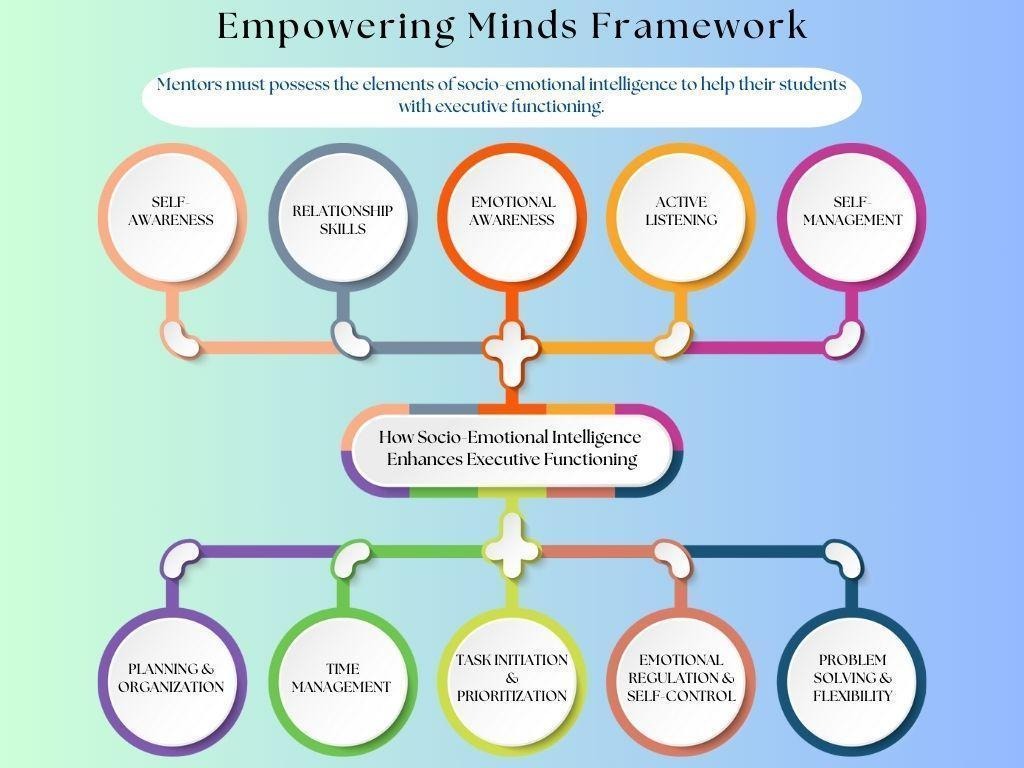
Figure 1 outlines the necessary components of socio-emotional intelligence that mentors must possess if they are going to successfully assist students in building their executive functioning skills. When mentors have strong self-awareness, they are better equipped to appreciate the strengths and weaknesses of not only themselves, but also their students. In turn, this can foster positive relationship skills that include maintaining presence to show respect during meetings, being sincerely interested in the student, and humanizing by sharing experiences. Emotional awareness is the ability to recognize, acknowledge and understand our own emotions, as well as those of others in order to maintain perspective, not catastrophize and regulate emotions that may hijack progress. Mentors who are active listeners are fully present, read non-verbal cues, ask open-ended, reflective questions and listen to understand while withholding judgment and advice. Finally, mentors who engage in self-management maintain emotional regulation, empathy, kindness and a genuine desire to maintain their self-worth, professional effectiveness and well-being while providing SEL support to their students.
Naturally, when a mentor is mindful of the growth and improvement of their students, the unspoken lessons of executive functioning are enmeshed in the mentoring relationship. When strong socio-emotional intelligence is in place, mentors have the skills to guide their students to plan and organize by helping them set goals, create steps to achieve them, and keep track of progress. Effective time management involves estimating time, meeting deadlines and comfortably delaying gratification to meet responsibilities. Small, seemingly insignificant time losses such as waiting in line, searching for misplaced items, or aimlessly browsing the internet in search of information for assignments can accumulate and hinder progress. Time management is not about perfection, rather it is about prioritizing and organizing tasks to make consistent progress toward goals. Mentors assist in helping students focus on what aligns with their goals, how to break large tasks into smaller, manageable chunks to avoid feeling overwhelmed.
Emotional Literacy
Emotions often play a significant role in hindering task initiation. Mental states like fear of failure, self-doubt, frustration, defensiveness, or anger can lead to procrastination. Procrastination can be a casualty to student success, but mentors with SEI can help their students start tasks, prioritize, and manage free time that is crucial to mental well-being. Students are often challenged in resisting distractions and impulses to stay focused. There are many studies indicating that anxiety is a prominent problem with today’s students. Mentors can assist their students in managing emotions to respond appropriately to challenges or setbacks as well as maintain emotional control during challenging times. Often, unregulated anxiety can create additional problems for students. At the same time, mentors can help the student identify solutions to obstacles and find creative ways to overcome them while adapting to new information, unexpected events, or changes in plans. When students can practice the art of intelligent neglect, they can learn to say no without feeling guilty and better communicate their priorities. When executive functions fail, individuals may have trouble analyzing, planning, organizing, scheduling, and completing tasks. They often struggle with managing frustration, initiating and finishing tasks, recalling and following multi-step directions, staying focused, self-monitoring, and balancing responsibilities. This is why a mentorship style, rather than simple advising, is more effective for students’ success in school and overall well-being. Mentors use a skill set that is anchored in social-emotional intelligence where advisors are focused on guiding in mostly academic matters.
Mentors who develop emotional literacy regularly use reflective practice to encourage emotional stability, and accentuate emotional quotient within the context of relational trust, reciprocity, and building connection with their students. Mentors, more than advisors, work diligently to encourage students to reframe certain situations to manage their responses (Brewer et al., 2022). However, it is just as important to recognize when our emotions signal that something in our environment needs to change. Strong emotions can serve as valuable indicators, helping us identify unhealthy situations that may require attention. It is important to acknowledge and address emotions rather than suppress them. The term “stress” is often overused, so students are encouraged to identify the specific emotions they are experiencing, whether frustration, fear, or shame, in order to address the root causes effectively. Balancing how we frame uncomfortable emotions with pleasant ones, such as curiosity, passion, and a sense of accomplishment, can foster resilience and motivation.
Mentors are repositories of what resources are available. As role models, they guide students in developing the tools to search for the information or support to overcome setbacks. Knowing the support system provided by mentoring offers guidance, reassurance, or a fresh perspective to help navigate challenges. When mentors know themselves, they can show those techniques of self-reflection to their students. Not until one understands their own strengths and weaknesses can they determine additional areas of need that must be developed. This can be accomplished through specific training programs to strengthen the skills of mentors. Mentors can model perspective by knowing how one’s attitude can determine whether someone accepts that a negative event can help one become more ambitious, increase motivation and persistence, which will lead to progress and success. Finally, mentors can assist students in dealing with disappointment. The demands of school and extracurricular activities can be overwhelming, but managing stress effectively is key to maintaining focus, productivity, and overall well-being. Stress is inevitable, but how one responds to it determines the ability to persevere. By developing practical strategies within the mentoring relationship to stay grounded and resilient, students can navigate challenges with greater ease.
The educational journey is filled with challenges and can be intense. Just as athletes train their bodies, students must train their minds to handle setbacks, stay focused, and maintain balance. By serving as role models in social-emotional capacities in addition to those in the academic realm, mentors go beyond a traditional advisor role. When advisors embrace the role of mentor, they are better equipped to help their students develop strong coping skills and resilience. Once students successfully practice these skills, they will be able to better manage stress, build resilience, and maintain forward momentum with confidence, which benefits both the mentor and the student. Social and emotional wellness is a vital component of students’ overall well-being and academic success, encompassing a broad set of skills and lived experiences. Mentors play a crucial role in supporting this aspect of student development, which is essential for fostering retention, mental health, and strong academic performance.
References
Brewer, M., van Kessel, G., Sanderson, B., & Carter, A. (2022). Enhancing student resilience by targeting staff resilience, attitudes and practices. Higher Education Research & Development, 41(4).
Brown, R. D., Geesa, R. L., & McConnel, K. R. (2020). Creating, implementing, and redefining a conceptual framework for mentoring pathways for education doctorate students. Higher Learning Research Communications, 10(2) 20– 37.
CASEL. (2022). Fundamentals of SEL. Collaborative for Academic, Social, and Emotional Learning (CASEL); CASEL. https://casel.org/fundamentals-of-sel/
Devis-Rozental, C. (2023). Developing the Socio-Emotional Intelligence of Doctoral Students. Encyclopedia, 3(4), 1178-1186.
Lundine, T. M. (2022). How Dissertation Faculty Leaders Develop Dissertation Chairs Using
the Knowledge Creation Process (Doctoral dissertation, Grand Canyon University).
Miller, W. R., & Rollnick, S. (2023). Motivational interviewing: Helping people change and grow. Guilford Publications
Roberts, L. R., Tinari, C. M., & Bandlow, R. (2019). An effective doctoral student mentor wear many hats and asks many questions. International Journal of Doctoral Studies, 14, 133.
Rogers-Shaw, C. A., & Carr-Chellman, D. J. (2018). Developing care and socio-emotional learning in first year doctoral students: Building capacity for success. International Journal of Doctoral Studies, 13, 233-253.
Prevent the Emotional Avalanche
That’s where Reach comes in. Our Pastoral Management module centralizes student insights and streamlines daily tracking, giving educators the real-time visibility they need to step in before minor struggles become major hurdles.
It’s technology designed to free up your team so they can focus on what matters most: intentional mentoring.
Ready to strengthen your school’s culture of care?